I have, I suppose, a circuitous relationship with the local music scene in my Central New York hometown of Syracuse. 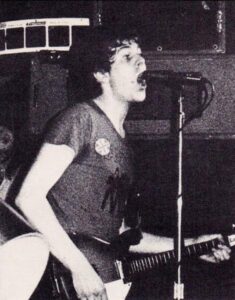 Certainly, I grew up loving rock, pop, soul, jazz, and country, and doing so unconditionally, I bought my first 45 when I was about seven, I (like so many my age) had my mind blown one Sunday night in February of '64 when, at age nine, I first saw the Beatles on Ed Sullivan, and I'd become a regular record buyer by the time I'd reached, maybe, the fifth grade.
However, by the time I'd gotten old enough to go out to music venues myself, pay the requisite cover charge, drink too many cheap, room-temperature draft beers, and personally absorb the blistering mojo of a high-energy club band, I’d pretty much moved on and was living elsewhere.
But that’s not to say I wasn’t still connected to the Syracuse music scene and, in particular, a handful of its players, if only though a series of marginally direct links – grade school, little league baseball, neighborhood friendships, my piano playing/music teaching uncle, my brief stint in local theater, the very pop culture blog you're reading now, my book Floor Burns, and, in one case, a curious combination of girlfriend, baseball, and dumb luck.
That last link was how I first came to meet and get to know a little about Gary Frenay.
Gary’s wife and my girlfriend at the time were workmates, and we’d all become friends though a chance encounter one day at a company clambake. That’s not only when Gary and I first discovered our mutual love of baseball, but when I first learned of his day job – as one of the most prolific songwriters and hardest working musicians in our once-thriving factory town, place that, for well over a century, had billed itself proudly as the Salt City.
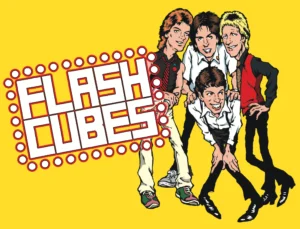 That’s also when I first learned more about his once-and-future band, the Flashcubes – a power-pop combo consisting of four local kids (one of whom, ironically, had grown up on Parsons Drive, just a block or so from me), a band that two decades prior had come this close to a national record deal and who, in the process, managed to develop a legion of followers worldwide; a following that, indeed, still exists today.
But back then, in the process of trying to secure that deal, it was suggested by someone those kids had hired to help get them to the next level, and someone they'd trusted to know better, that their weak link was their rhythm guitarist and de facto front man – a wild, strutting cock-rooster from East Syracuse named Paul Armstrong.
And before they'd a chance to even conjure up the word “Oops,” much less actually say it, Paul was gone – and the Cubes, once a high-energy, power-pop quartet, suddenly found themselves rebranded Screen Test, a still-tuneful, but now markedly less theatric (and fundamentally less kinetic) power-pop trio.
I write this today because earlier this month, the close-knit local Syracuse music community lost that very same Paul Armstrong to prostate cancer – yet one more victim of that utterly heartless disease, and yet one more example of a remarkable man and musician whose time and work among us now feel not only profoundly under-appreciated, but sadly unfinished.
I won’t kid you. I didn’t know Paul well. And I only met him through Gary and interacted with him just a handful of times.
We first met after he and Gary had weathered the, understandably, years-long chill in their once-close friendship. It was after that chill’s long-overdue thaw, after Gary had fully acknowledged and owned the “biggest mistake of my life,” and after the two had hugged it out and reconnected as older but, now, profoundly wiser men.
It was also after Paul had moved to Boston, married, and started a family of his own – while quietly never losing sight of his dream of playing rock 'n roll as loud as he could, and for as long as he could.
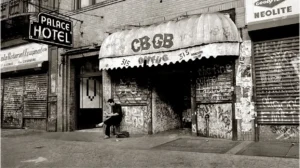 It was early 2000. I was living in Manhattan's Upper West Side. Gary called that February and told me that the Cubes – as was their wont – were reuniting (all four members) for a late April gig at the legendary CBGB, a gem of a dive in an earthy little part of the Lower East Side. I was beyond thrilled. Not only had I never been to CBGB, much less seen a show there, but I’d never once seen the Flashcubes live before.
Oh sure, I’d heard them plenty on CD. But I’d never seen them in their element – especially this element, one of the most storied down-and-dirty music venues in rock history; notably punk and what, when it first emerged, critics insisted on calling “new wave.”
Consider, the Ramones had cut their teeth at CBGB, as had Blondie, Talking Heads, Television, Richard Hell, and Patti Smith, among countless other edgy Seventies and Eighties icons. When Elvis Costello and the Police, for example, first launched in the States, their portal of choice was the cramped wooden stage at CBGB.
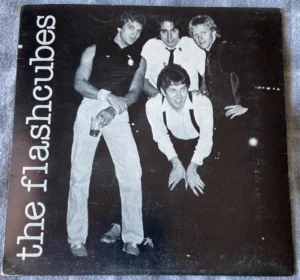 For headbangers, hell-raisers, and musical envelope-pushers the world over, the place was, indeed, hallowed ground.
I knew its section of town well, if only because over the years I’d become something of a regular at the Great Jones Café, a fabulous little Creole/Cajun hole-in-the-wall eatery with an absolutely killer jukebox, a place that sat just around the corner from CBGB. But what struck me most as I approached the venue that April night was not so much CBGB’s legendary canopy, as it was the Bowery street number that sat in its lower right-hand corner.
The small and largely inconspicuous number read “315” – my old hometown’s area code. “This,” I smiled to myself as I tugged the front door open, “is gonna be fun.”
Despite the fact it was a Friday night, because the Flashcubes were the evening’s opening act, the crowd was still relatively small. So, after paying my cover charge, I grabbed a beer at the bar, and found a seat adjacent to the stage – just to the right of it. It was a perfect spot to see the show, and a vantage point, I suppose, not unlike watching from one of the wings.
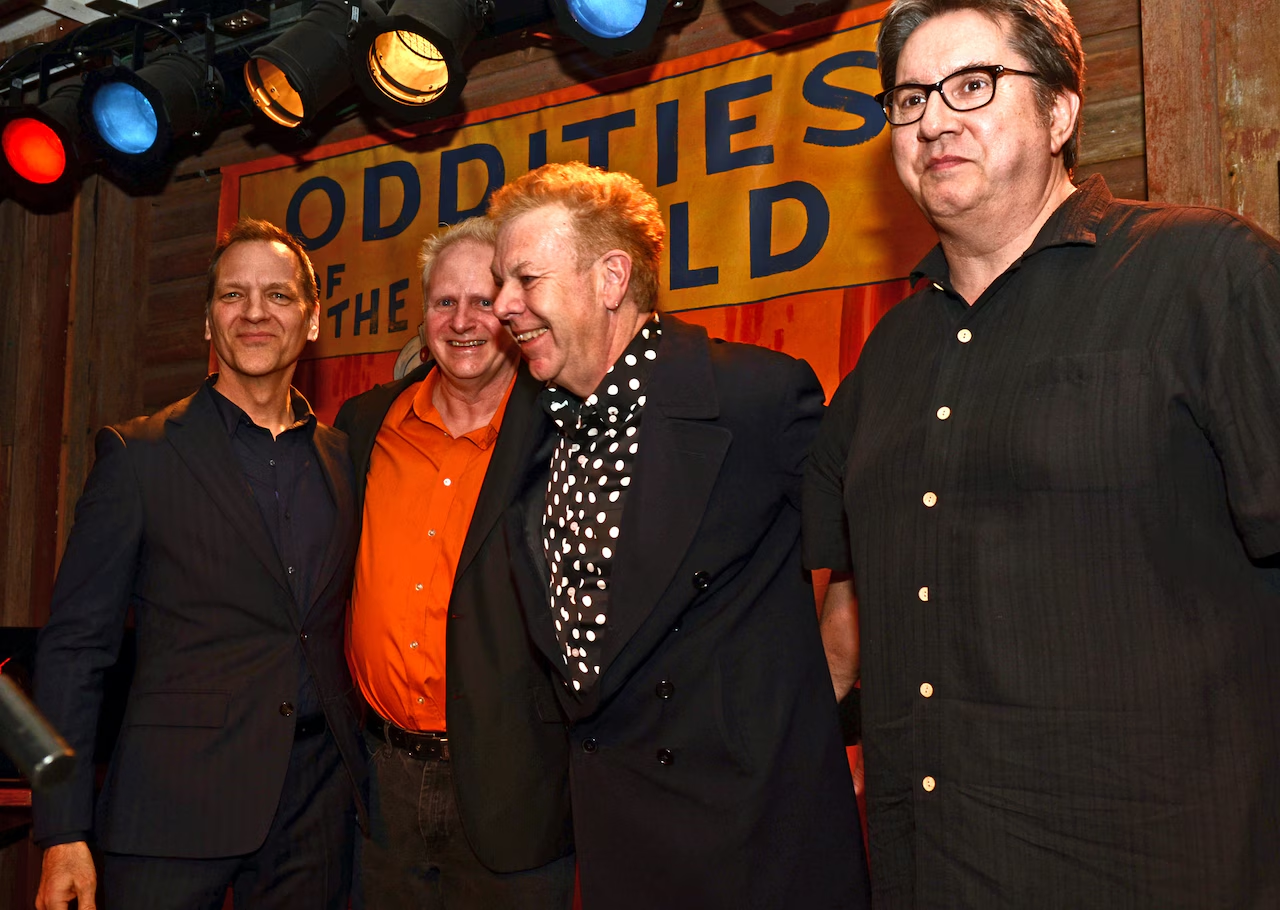 In all honesty, my anticipation was slightly tempered by the fact that this version of the Flashcubes was not exactly the one that had lit up so many Central New York risers and stages years ago. They were no longer, in other words, four lean-and-hungry kids with haughty dreams of rock stardom dancing in their heads. They were now middle aged men. Realists. Pragmatists. Fathers, husbands and uncles. Guys burdened with day jobs, to-do lists, and chronic health issues, ones whose nights were no longer fueled by visions of sold out stadiums, chartered jets, roadies, limos, chilled Cristal, all-night parties, and Rolling Stone cover shoots.
Still, I was excited as all get-go and absolutely overflowing with expectation. Besides, the beer was sure going down easy.
I didn’t have to wait long, as within minutes the Cubes had taken the stage and were soon filling every inch of that venerable old club with the kind of bold and thundering (yet irrepressibly melodic) power chord changes that had long-since become synonymous with their name and sound. For me it was both a thrill and, as it turns out, a first. Because after that night, I’d never again have to admit I’d never seen the Flashcubes play live.
The next day, when Gary and I spoke (we didn’t get a chance to talk immediately after the gig), I told him how blown away I was by the energy and excitement of his band's performance the previous night. And though I made casual reference of this to Gary at the time, I didn’t fully expand on how, as incredible as I thought all the Cubes were, the guy who most blew me away was Paul.
As the Flashcubes' driving rhythm section, Gary, as bassist, and my former neighbor Tommy Allen, the drummer, provided each of their originals with a foundation so solid and pulsing that even a non-talent like yours truly might have been able to get up there and fake it for a chorus or two. What’s more, as I expected, Arty Lenin was a even better and more compelling lead guitarist in person than he’d sounded on so many of the studio recordings I’d heard over the years. And, of course, vocally, the entire band made the songs in their setlist soar – all but a handful, as just referenced, an original composition.
But honesty compels me to admit that what I beheld that night was, pretty much, the Paul Armstrong show.
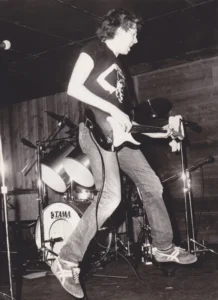
Paul didn’t merely take CBGB's stage that evening, he owned it. He grabbed it by its balls and squeezed hard, making that storied old stage beg for a mercy that he was simply never going to show it. So much so, in fact, that I remember having trouble taking my eyes off the guy, a seemingly innocuous 40-something rhythm guitarist who magically transformed right before my eyes, and did so the moment he set foot onstage and plugged himself in.
Paul didn’t just become a wild animal that night. He became a savage, even vicious brand of wild – and he exuded a throbbing energy that, I swear, felt a touch like that of a lioness slowly gaining on the poor wide-eyed critter destined to become, in another heartbeat or two, her family's dinner.
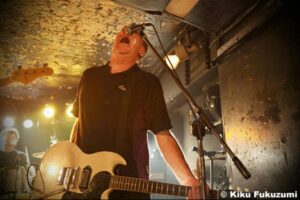 Paul bounced. He pranced. He preened. And he swung his very own nine-pound hammer with a force and fury that seemed his and his alone. At one point, his timeworn face grew menacing as he leaned into his mic and howled like a lone wolf on a moonlit night.
The one and only time I saw his band perform together as a unit; and he was not merely a part of it. He was its beating heart. And, truly, he was so much more than just one more aging, windmilling rocker suddenly thrust back into the spotlight.
That night on the Lower East Side, Paul became the spirit of rock 'n roll incarnate, the human embodiment of everything rock has always stood for and everything it always wanted to believe about itself, especially in the minds of those who loved it most. And he certainly represented everything those folks believed about their favorite music's ability to ferret out bullshit, wherever it found it, and to tear it out by its f'*ckin' roots.
That night, Paul Armstrong, at nearly 50 years old, served as a visual reminder of the extent to which the right three chords played in a small, sweaty club (especially the right three chords played just so) still carried with them the inherent ability to raise the dead, make paint peel, and transport just about everyone in the place to a higher plane of existence.
In fact, and it pains me to admit this to Gary, Tommy, and Arty now, but to this day, when I think of that first Cubes gig I ever got to experience – my maiden voyage on the USS Flashcube, if you will – I have trouble remembering much of it at all; beyond, of course, the middle-aged bonfire who'd, fortunately, taken up residence on my side of the stage, the strutting, screeching man-child from New England by way of Syracuse, and the loving father of three with the gently thinning hair and the ever-so-faint potbelly who kept me utterly transfixed for as long as he was up there demanding it of me.
I’ve never, ever met Paul’s longtime partner, Margie, the love of his life. Nor have I've never had the pleasure of meeting his kids, Chris, Katie, and Nick, all of whom he apparently adored. What’s more, there’s a pretty good chance I never will.
But, I suppose, if I were to offer Margie my thoughts on the recent passing of her best friend and soulmate, they might go a little like this: I really liked Paul, Margie. Really did. Liked him a lot. But, while I won’t even try to pretend to understand what you're feeling at this moment, or what you're going through, I at least have an inkling. Because one night a quarter century ago, I watched your best guy perform open heart surgery on a handful of songs that he and his mates had written, and do it in a room only slightly bigger than a broom closet, and all without the benefit of even a trace amount of anesthesia.
What’s more, I saw first-hand the extent to which that son-of-a-gun was willing to open a vein, pour out his heart, and share a meaningful part of whatever he had left inside him with a roomful of complete strangers, all in the name of a music he lived, loved, and wore like few others.
 Given that, and given what I've subsequently learned, I can only image how much Paul would have given of himself to someone he actually cared for, much less loved unconditionally. Someone, in other words, just like you. And for that reason and others, I am so sorry, and my thoughts are with you and your family.
Rest in peace, PA. Godspeed. And whatever’s out there, and however you fit into it, don’t ever stop strutting, don’t ever stop howling at the moon, and, above all, don't ever stop rocking.
(And forgive me if I now play for anyone reading this Reminisce, the final song you ever wrote and recorded with the Flashcubes. Because its now-haunting lyrics and message of younger days, times passed, and warm memories, not to mention its incredible vocal energy – your incredible vocal energy – seem both appropriate and a note-perfect way to put a button on this brief-but-heartfelt reflection – one fan's tribute to you, your profound musical legacy, and the timeless gift that you left the remarkable little Central New York town that once upon a time, so many years ago, we both called home.)






Keep on Rocking M.C. Good to see you still practicing your craft
All the best to you from this old Rosary Boy. Peace, out!
Ed! Thanks so much, my friend. It's funny, I just had a Rosary night last week. Peter Tobin (who lives out here) and I had dinner at this great little Italian place not too far from me. It was there that we toasted the passing and memory or Jimmy "Mitch" Michaels, a Wadsworth legend and one of the most memorable/colorful Heightsmen of them all. Hope you're doing well. And thanks again!
MC: Loved your well-written article on Paul Armstrong, The Flashcubes, and related memories. It's very sad to hear of Paul's passing, truly a GOAT. I enjoy your writing very much, brother. Be well.
Best,
Joe Sorbello
CBA Class of '73
Thank you so much, Joe. In this particular case, I had a lot to work with. Again, thank you. Hope you're doing well.
Great piece and obviously heartfelt. Wish I had been there!
It was a great night. BTW, did you ever get a chance to get to the Great Jones Cafe? Killer spot. Authentic Cajun food and a jukebox, I swear, straight outta heaven.
Great job. MC. Took the words right outta my mouth. The Salt City mourns.
Thank you so much, Mike. So many people have since expressed similar feelings about Paul as both a person and a rocker. BTW, Kade Anderson's my newest Mariner fixation. Don't be surprised if we see him at some point later this summer.
<3